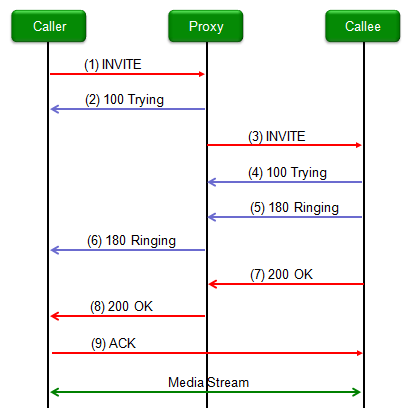
INVITE is a session initiation (session creation) process in SIP based communication. There are some SIP communication that does not require a session establishement (e.g, SMS over IMS or some other form of Short Message), but most of the IMS/SIP based communication (e.g, VoLTE, Video, File Transfer etc) are going on in a session. Whenever the session needs to be established, it is done by INVITE process. The critical part of this process is 'INVITE' at the beginning and 200 OK at the end. But in reality, many other steps are going on between the INVITE and 200OK and the detailed sequences of messages between INVITE and 200 OK differs depending on what kind of session is to be established. (If you are not familiar with what Session means, refer to Session page)
The example in this page is the simplest form of INVITE being used in VoLTE. The example in this page focus only the INVITE and its corresponding 200 OK. If you want to know the details of other messages and contents of those messages, refer to MO VoLTE with PreCondition.
INVITE sip:user1@192.168.1.11:35057 SIP/2.0
Via: SIP/2.0/UDP 192.168.1.12:64701;branch=z9hG4bK635101086453090273;rport;transport=UDP
Max-Forwards: 69
Call-ID: 635101086453000268@192.168.1.2
CSeq: 7 INVITE
Via: SIP/2.0/UDP 192.168.1.2:64627;branch=z9hG4bK635101086453000268;transport=UDP
To: <sip:user1@anritsu-cscf.com>
From: <sip:0123456789@anritsu-cscf.com>;tag=1111111111
Contact: <sip:0123456789@anritsu-cscf.com:64627;transport=udp>
Allow: INVITE, UPDATE, ACK, CANCEL, BYE, PRACK, MESSAGE
Supported: 100rel
Supported: precondition
Accept-Contact: *;+g.3gpp.icsi-ref="urn%3Aurn-7%3A3gpp-application.ims.iari.gsma-vs";require;explicit
Privacy: id
Content-Type: application/sdp
Content-Length: 565
This SIP message clip highlights the following parameters: Via, Contact, CSeq, Call-ID, From, To, Content-Type, Content-Length, Accept-Contact, Max-Forwards, Supported, Allow, Privacy. Use these fields to correlate routing, dialog identity, transaction sequencing, registration/session state, security context, and media negotiation for this part of the procedure.
Record-Route: <sip:192.168.1.2;lr>
SIP/2.0 200 OK
Via: SIP/2.0/UDP 192.168.1.12:64701;rport=64701;branch=z9hG4bK635101086453090273;transport=UDP
From: <sip:0123456789@anritsu-cscf.com>;tag=1111111111
To: <sip:user1@anritsu-cscf.com>;tag=1076437947
Contact: <sip:user1@192.168.1.11:35057;transport=udp>
Call-ID: 635101086453000268@192.168.1.2
CSeq: 7 INVITE
Content-Type: application/sdp
Content-Length: 527
Via: SIP/2.0/UDP 192.168.1.2:64627;branch=z9hG4bK635101086453000268;transport=UDP
This SIP message clip highlights the following parameters: Via, Contact, CSeq, Call-ID, From, To, Content-Type, Content-Length. Use these fields to correlate routing, dialog identity, transaction sequencing, registration/session state, security context, and media negotiation for this part of the procedure.
Record-Route: <sip:192.168.1.2;lr>
Allow: ACK, BYE, CANCEL, INVITE, MESSAGE, NOTIFY, OPTIONS, PRACK, REFER, UPDATE
This SIP message clip highlights the following parameters: Allow. Use these fields to correlate routing, dialog identity, transaction sequencing, registration/session state, security context, and media negotiation for this part of the procedure.
ACK sip:user1@192.168.1.11:35057 SIP/2.0
Via: SIP/2.0/UDP 192.168.1.12:64703;branch=z9hG4bK635101086492402521;rport;transport=UDP
Max-Forwards: 69
Call-ID: 635101086453000268@192.168.1.2
CSeq: 7 ACK
To: <sip:user1@anritsu-cscf.com>;tag=1076437947
From: <sip:0123456789@anritsu-cscf.com>;tag=1111111111
Via: SIP/2.0/UDP 192.168.1.2:64627;branch=z9hG4bK635101086453000268;transport=UDP
Content-Length: 0
This SIP message clip highlights the following parameters: Via, CSeq, Call-ID, From, To, Content-Length, Max-Forwards. Use these fields to correlate routing, dialog identity, transaction sequencing, registration/session state, security context, and media negotiation for this part of the procedure.